Investing in Your Home and Your Quality of Life
joy of nesting
Investing in your home and your quality of life is important. But even with a healthy budget, we sometimes overspend or choose the wrong things for our homes, and our choices end up being more of an energy drain than an improvement.
With proper planning and a realistic budget, we can make home improvements that feel intentional rather than arbitrary.
Understanding the Good, Better, Best Home Makeover Budget Model
Before diving into specific upgrades, think about your home improvement budget first. I find Elizabeth Warren’s 50/30/20 Budget Rule useful.
Allocate roughly 50% of your household income to essentials. 30% to non-essentials. And 20% to savings, investment or debt repayment. This approach ensures that every dollar is allocated and keeps your home improvements within the range you feel comfortable with.
Once you have a sense of your overall budget, the Good, Better, Best Home Makeover Budget Model helps you translate those numbers into action.
“Good” updates provide noticeable improvements without a large investment. “Better” upgrades add moderate style, function, or comfort and typically require modest spending. “Best” changes are high-impact transformations that elevate a room and make it uniquely yours.
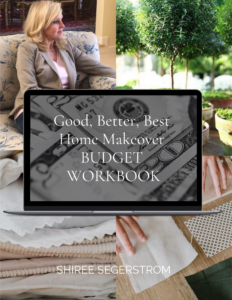
Download the Good, Better, Best Home Makeover Budget Workbook
Refresh your home confidently with three, good, better and best sample budget models and the 50/30/20 formula for managing costs and setting realistic expectations for every project to help you invest in the right things for your home and avoid buyer’s remorse. Get the Good, Better, Best Home Makeover Budget Workbook here.
Choosing Where to Invest in Your Home
When deciding where to spend your home improvement dollars, it’s easy to feel pulled in multiple directions. You might be tempted to tackle every room at once or splurge on the trendiest new pieces. But thoughtful investment starts with understanding which changes will have the biggest impact.
Start by looking at the living spaces you use most—your living room, your kitchen or master bedroom. These are the areas where thoughtful upgrades can make daily life feel more enjoyable while also boosting your overall feelings about your home. Consider both the practical and aesthetic aspects.
When considering your budget, is a kitchen remodel feasible this year? Or maybe this year you focus on refurbishing some of your older, but high-quality furniture pieces and save the kitchen for next year. Consider which one will have the biggest impact on your life right now, that’s also within your budget.
An all or nothing approach doesn’t work well on things that need maintenance like our health and home. Intentional upgrades over time is a sensible approach for non-essential expenses.
Preserving and Upgrading Existing Furniture
Quality is rare in today’s furniture production. Quite often, the furniture you have had for 20 years has significantly better quality than the furniture you buy today.
Before replacing pieces, take stock of what you truly love and what could be refreshed with some care. Often, a new fabric or finish is all that’s needed to make a familiar piece feel new again.
Upgrading furniture doesn’t always mean buying something new. Simple changes, like reupholstering a favorite chair, or refinishing a wooden table can completely transform a space.
Creating a Home That Reflects Your Style
Incorporating personal touches—artwork, heirlooms, or objects collected over time adds depth and warmth to your living spaces. By combining new purchases with older pieces that are already in your home, you create a home with meaning and connection — that feels more like an investment in your quality of life rather than just another disposable refresh.
What is Wellness Design? Learn more about the connection between your wellbeing and your home, featured on Deirdre Fitzpatrick’s Dying to Ask Podcast. And if you’d like to dive deeper into this topic, check out my blog post, “Hiring an Interior Designer”.
March 9, 2026
What's Popular
READERS' FAVORITES